The construction industry has made a rapid shift to incorporating digital technologies to manage their entire process. At the core of this transformation is construction ERP software, which connects every department on a single integrated platform. But, one aspect to be keenly noted is that, as businesses become more digital, it also becomes vulnerable to cyber threats. This makes construction ERP data security a top priority for modern contractors.
When we talk about complete digitisation of construction operations, it means your company might have to store huge packs of sensitive data starting from project budgets and contracts to payroll records, supplier data and historical information. This such arrangement, a single cyberattack can disrupt the entire operation resulting in project delay, reputation damage and significant losses.
So, while making a decision to go for a construction ERP software, it becomes equally important to choose on with the most advanced data security detail.
Why Construction Companies Are Increasingly Targeted
Contractors are a high interest target for cybercriminals because they handle high-value financial transactions, critical infrastructure data and confidential project documents. Construction businesses always include multiple stakeholders like clients, subcontractors, consultants and vendors. By hacking into one software, the hacker could gain access to confidential information related to all the stakeholders. Also as the employees access ERP systems from several locations like offices, multiple project sites and mobiles, the number of potential security entries continues to grow.
So, to address this growing threat, cybersecurity in the construction digital ecosystem has significantly changed over the last few years.
The Risks of Poor Construction ERP Data Security
A security breach has way more impact than data loss.
Operational Disruptions:
Cyberattacks like ransomware can seal access into all project data like schedules, procurement records or financial information, which could halt all construction activities.
Financial Losses:
Downtime, legal cost, and potential ransom payment can tune into significant financial loss.
Reputation Damage:
Clients trust contractors with sensitive information. A security breach can weaken confidence and the message could spread, damaging company reputation and future business opportunities.
Compliance Issues:
Laws in several regions prioritise protecting customer and employee data. Inadequate data security can lead to regulatory penalties and contractual disputes.
Such high risks emphasize why construction ERP data security should be considered a strategic investment rather than an operational expense.
Essential Features of Construction ERP Security
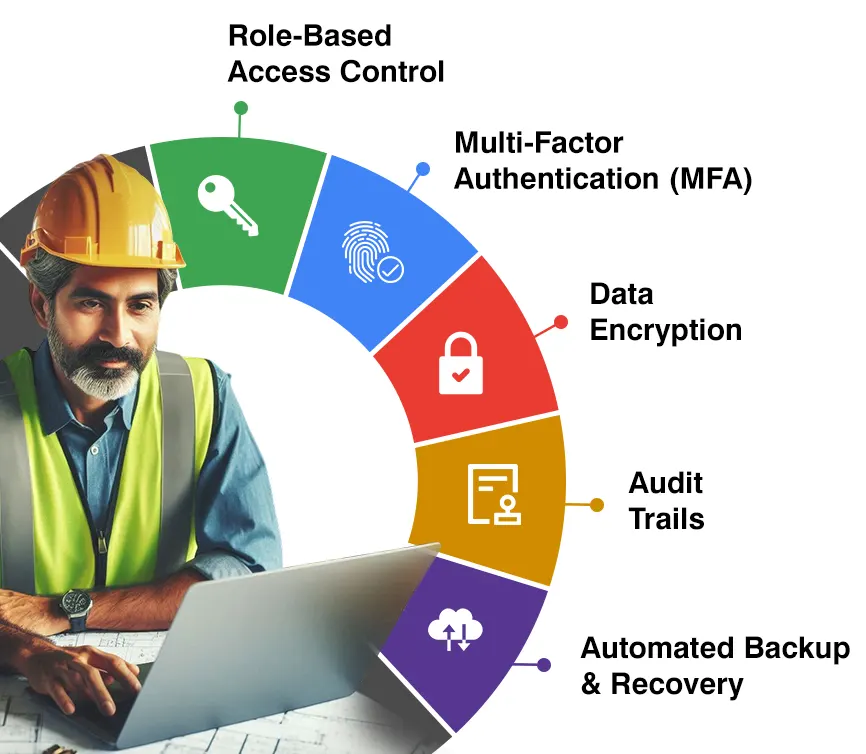
Protect your projects, data, and business with these five security pillars.
1. Role-Based Access Control
- Restricts access based on employee roles
- Prevents unauthorized data exposure
- Protects confidential business information
2. Multi-Factor Authentication (MFA)
- Adds an extra verification layer
- Prevents unauthorized logins
- Protects accounts from stolen credentials
3. Data Encryption
- Encrypts data at rest and in transit
- Keeps sensitive information unreadable to attackers
- Safeguards financial and project data
4. Audit Trails
- Records user logins and activities
- Improves accountability
- Enables faster security investigations
5. Automated Backup & Recovery
- Automatic data backups
- Faster disaster recovery
- Minimizes downtime after cyber incidents
Together, these capabilities form the foundation of strong Construction ERP Security.
The Growing Importance of Construction Risk Management in GCC and the Role of Tactive
Choosing a Secure Construction ERP
When evaluating ERP software, functionality should not be the only consideration. Security must be a key factor in the decision-making process.
Before investing in an ERP in addition to checking the dedicated functionalities, also check for the security measures loaded with it.
Ask for the following with your construction ERP software provider.
- Does the ERP offer role-based access control?
- Is business data encrypted both at rest and in transit?
- Are regular security updates provided?
- Does the system maintain detailed audit logs?
- Are backup and disaster recovery features included?
A trusted ERP provider will prioritize Construction ERP Data Security and continuously enhance its platform to defend against evolving cyber threats.
Future of Construction ERP Security
Cyber threats are growing day by day, so are ERP systems. As construction ERP software evolves, artificial intelligence also comes to play a bigger role in identifying suspicious cyber activities, detecting any mishaps and preventing cyber-attacks before that could impact business operations.
Cloud-based ERP platforms also offering advanced security capabilities, including continuous monitoring, automated threat detection and secure disaster recovery. These advancements are turning construction ERP security into a stronger and proactive respondent to cyber threats.
Conclusion
Digital transformation has transformed the construction industry, and taught us the important lesson of protecting business data. Starting from financial records to employee information and project documents to client related details, every piece of information stored within an ERP system is valuable.
Prioritising construction ERP data security enables Contractors to reduce cyber risks, maintain operational continuity, strengthen client trust, uphold company reputation and comply with evolving regulations. Combined with robust construction cybersecurity practices and a secure ERP platform, businesses can confidently embrace digital transformation without compromising security.
In the present day digital ecosystem, data security has gained attention to be a core aspect of any construction ERP software. Contractors who invest in advanced construction ERP security will be well prepared to protect their projects, reputations and long-term growth.
To explore more dedicated data security features in a construction ERP. Connect now and know more.